Fifteen galleries. Objects, textiles, manuscripts, coins, maps and songs — each dated, sourced and set in its historical context. A living archive of a people whose homeland is being erased.
15 galleries · 40 exhibits · open access
Curator's note
This museum is a digital reconstruction, not a collection of catalogued originals. Most Rohingya material culture inside Myanmar was burned, bulldozed or left behind, and there is no national museum that collects it. Each exhibit here represents a documented object type, practice or record, illustrated with a commissioned or representative image and accompanied by published sources. Where a claim is contested — as much of Rohingya history is — we cite the primary legal or scholarly record rather than assert it. If you hold real objects, photographs or testimony, we would be honoured to document them.
Read the picture
Four objects, four centuries, one argument
Every image in this museum is a reconstruction of a documented object type, and every one carries a history. Start with these four — read the picture first, then the record behind it.
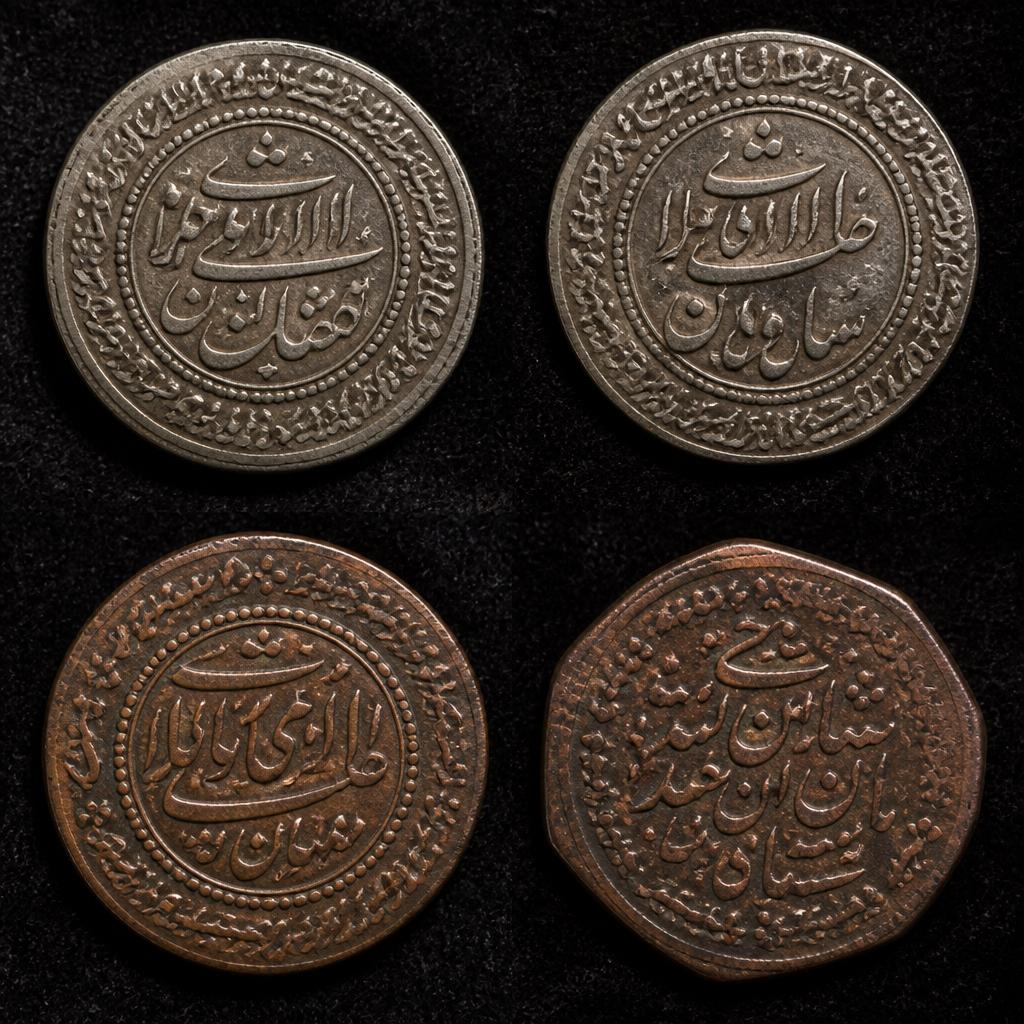
Silver Tanka of the Mrauk-U Kings — Mrauk-U mint, Arakan, 15th – 17th century
Old Coins & Currency
Silver Tanka of the Mrauk-U Kings
The silver tanka in this photograph is the single most quoted object in Rohingya history arguments. Mrauk-U kings from 1430 onward struck coins carrying Persian and Arabic inscriptions and used Muslim regnal titles beside their Buddhist ones — a direct inheritance from the Bengal Sultanate that restored King Narameikhla to his throne. Coins like this are physical evidence that Islam belonged to Arakan's political culture centuries before British-era migration.
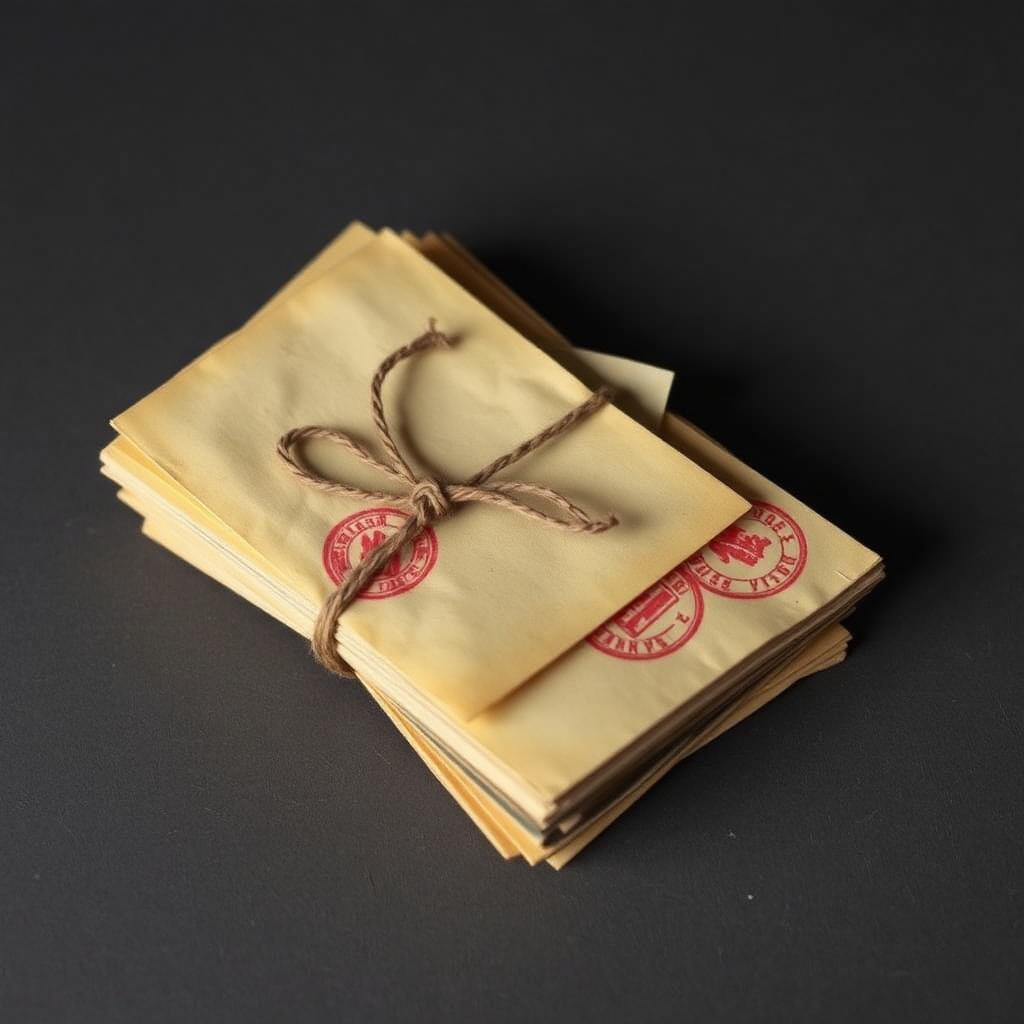
National Registration Card (NRC), 1950s — Union of Burma, 1950s–1960s
Manuscripts & Documents
National Registration Card (NRC), 1950s
These bundled 1950s papers stand for the National Registration Cards issued in parliamentary Burma. In that decade Rohingya voted, sat in parliament, and heard their language broadcast by the state between 1961 and 1965. Cards like these were confiscated after the 1962 coup and made worthless by the 1982 Citizenship Law — families still keep them, tied and hidden, because they are the last paper proof that the state once counted them as citizens.
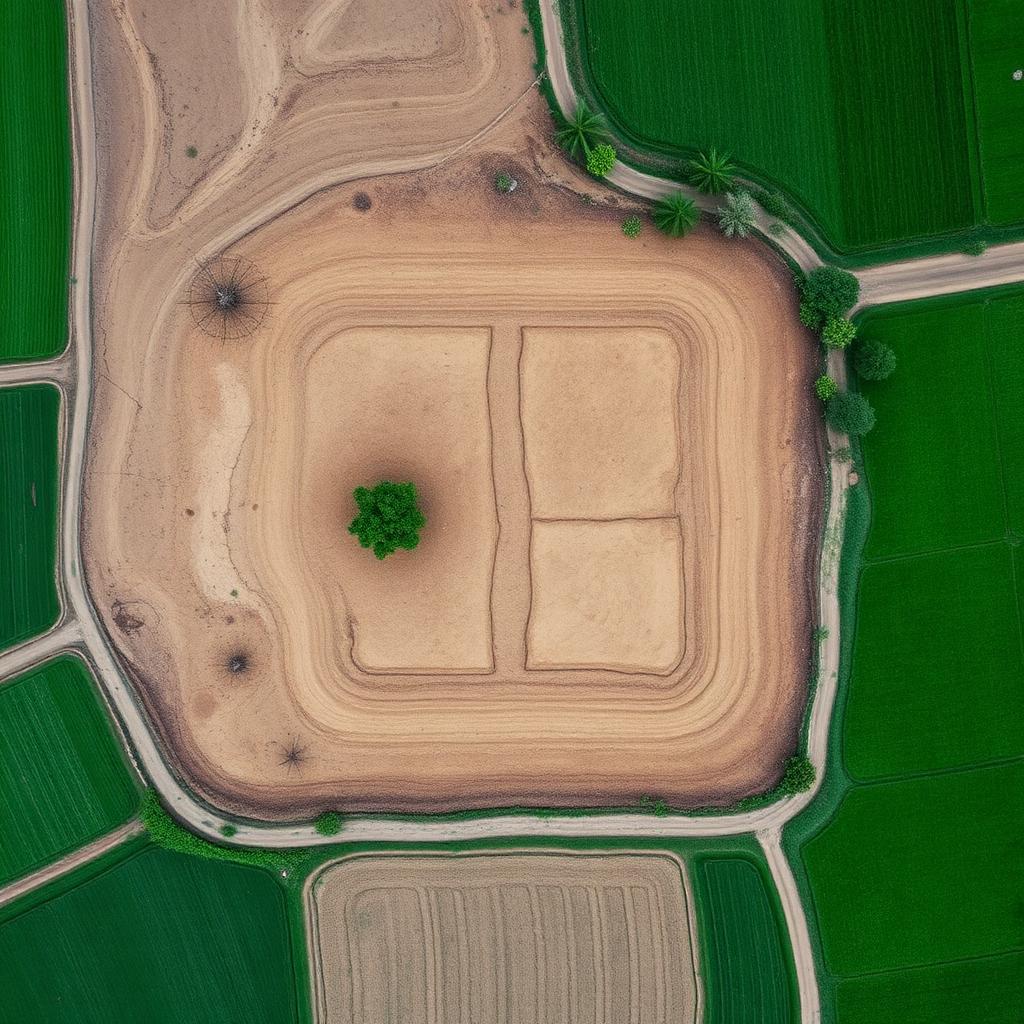
Record of Destroyed Places of Worship — Maungdaw, Buthidaung, Rathedaung, 2017–2020
Mosques & Architecture
Record of Destroyed Places of Worship
This aerial view shows what remains of a cleared village site: flattened earth, faint foundation lines, surrounding fields untouched. It is the visual signature that human-rights analysts and satellite imagery specialists documented across northern Rakhine after August 2017 — burning first, then bulldozing, which removes the evidence of what was burned. Mosques and madrasas were among the structures destroyed, and that record was placed before the ICJ.
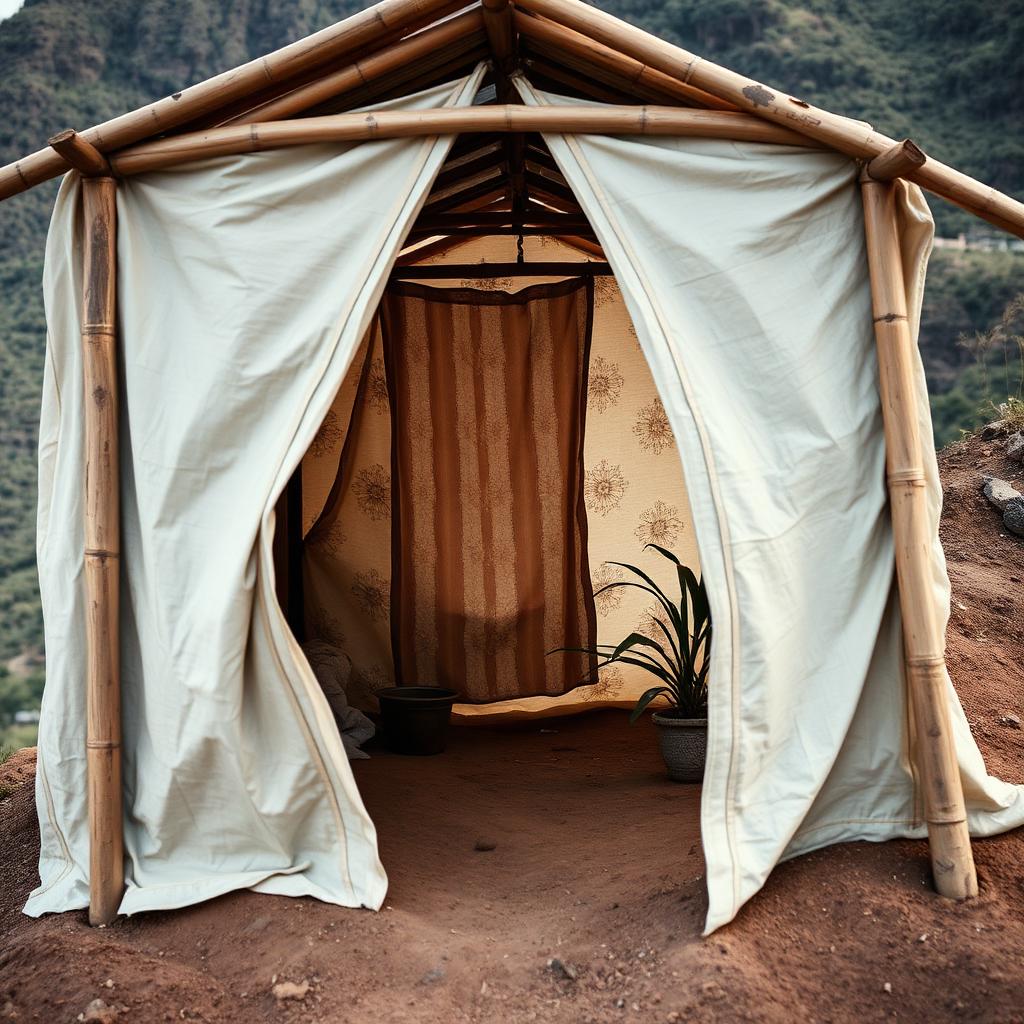
Bamboo and Tarpaulin Shelter — Cox's Bazar camps, 2017–present
Village Life
Bamboo and Tarpaulin Shelter
This is the replacement home for nearly a million people: split bamboo lashed with wire, wrapped in tarpaulin, floored with earth. Permanent materials are restricted by Bangladeshi policy, so the structure is rebuilt after every cyclone and fire season. Look for the doorway curtain and the potted plant — the small architecture of families refusing to live as if they were temporary.
Historical context
Six centuries of Rohingya history, in ten rooms
The objects in this museum only make sense against the history that produced them — and the history that destroyed most of them. Each era links to a fuller sourced chapter.
8th–14th century
Arab traders and early Islam in Arakan
Arakan sat on the sea route between the Bay of Bengal and Southeast Asia. Arab, Persian and Bengali merchants settled along the coast, and Muslim communities existed in the region centuries before European contact.
King Narameikhla regained the throne in 1430 with help from the Bengal Sultanate. Mrauk-U kings used Muslim titles, struck coins with Persian inscriptions, employed Muslim ministers and patronised poets such as Alaol. Muslims were soldiers, courtiers, cultivators and traders in a Buddhist-ruled kingdom.
The Konbaung conquest of 1784–85 ended Arakanese independence. Tens of thousands fled to British Bengal to escape forced labour and deportation — the first large modern displacement out of Arakan.
After the Treaty of Yandabo, Arakan was governed from British India, and seasonal and permanent movement across the Bengal boundary became routine. Colonial census categories and land policy hardened communal divisions later used to argue that Muslims in Arakan were foreign.
The Japanese invasion split Arakan: many Muslims sided with the British, many Rakhine Buddhists with the Japanese. Massacres in 1942 displaced both communities into separate northern and southern zones, a segregation that never fully reversed.
Rohingya held identity cards, voted and were elected to parliament; the Mayu Frontier Administration governed the north, and Burma Broadcasting Service ran Rohingya-language programmes from 1961 to 1965.
After Ne Win's coup, documents were confiscated and Operation Nagamin (1978) drove some 200,000 people into Bangladesh. The 1982 Citizenship Law then defined citizenship by 'national races' and left the Rohingya stateless.
Around 250,000 fled in 1991–92. Those who remained faced movement restrictions, marriage permits, forced labour and land confiscation under the NaSaKa border force. The 2012 violence in Rakhine displaced some 140,000 people, most Rohingya, into closed camps around Sittwe.
Military 'clearance operations' after attacks on police posts drove more than 700,000 people into Bangladesh within months. The UN Fact-Finding Mission concluded there was sufficient information to warrant investigation of senior generals for genocide, crimes against humanity and war crimes.
The Gambia brought Myanmar before the International Court of Justice under the Genocide Convention in 2019, and the ICJ ordered provisional measures in 2020; the ICC is investigating deportation to Bangladesh, and Argentina has issued arrest warrants under universal jurisdiction. Meanwhile about a million people remain in Cox's Bazar, with renewed fighting in Rakhine from 2023 causing further displacement.
A new front line, a shrinking ration, a first judgment
The Arakan Army took Buthidaung and Maungdaw in 2024, and Rohingya civilians were caught between the army that conscripted them and the armed group that displaced them; some 150,000 more crossed into Bangladesh. In January 2026 the ICJ concluded merits hearings in The Gambia v. Myanmar with eleven states intervening — the first judgment on whether the 2017 operations were genocide is now awaited. In April 2026 WFP replaced the flat camp ration with three needs-based tiers, and the 2026 Joint Response Plan asked for US$710.5 million, 26% less than the year before. In August 2026 Myanmar said it had verified 308,797 people for eventual return; no one has yet gone home.
Twelve entries drawn from chronicles, colonial surveys, statutes and court filings — the written record that the objects in this museum sit inside. Each links to a citable source.
9th–14th c.
Arab and Persian shipping on the Arakan coast
Arakan lay on the sailing route between the ports of Bengal and the Malay world. Arab, Persian and Bengali merchants traded and settled along the coast, and Muslim communities existed there long before European contact — the background against which Arakan's later Islamic court culture developed.
After years of exile at the Bengal Sultanate court in Gaur, Narameikhla (Min Saw Mun) regained the Arakanese throne with Bengali military help and founded Mrauk-U. Muslim soldiers, administrators and craftsmen came with him. His successors struck coins with Persian inscriptions and used Muslim regnal titles beside Buddhist ones for roughly two centuries.
The poet Alaol, carried to Arakan as a captive, became one of the great writers of medieval Bengali literature under the patronage of Muslim ministers serving the Buddhist kings of Mrauk-U. His work is documentary proof of a literate, Persian- and Bengali-speaking Muslim elite inside the Arakanese state.
The Scottish physician Francis Buchanan published a comparative vocabulary of Burmese-empire languages and described Muslims long settled in Arakan who called themselves 'Rooinga' — natives of Arakan. It is the earliest widely cited European record of the name and is repeatedly used against later claims that the identity was invented in the 20th century.
…the Mohammedans, who have long settled in Arakan, and who call themselves Rooinga, or natives of Arakan.
Francis Buchanan, Asiatic Researches, vol. 5 (1799)
Burmese king Bodawpaya annexed Arakan, ending its independence. Tens of thousands of Arakanese — Buddhist and Muslim — fled forced labour and deportation into British Bengal, the first large modern displacement out of the region and the origin of long-standing cross-border communities.
The First Anglo-Burmese War transferred Arakan to British rule. Governed from Calcutta, the Bengal boundary became an internal colonial line, and seasonal agricultural migration across it was ordinary and lawful. Colonial censuses simultaneously hardened communal categories that Burmese nationalism later used to define Arakan's Muslims as foreign.
When British administration collapsed before the Japanese advance, Arakan split along communal lines: many Muslims armed by the British in the north, many Rakhine Buddhists aligned with the Japanese in the south. Massacres on both sides killed tens of thousands and sorted the population into separate northern and southern zones — a segregation that was never reversed.
Under the parliamentary government, the Burma Broadcasting Service transmitted programmes in Rohingya, and the Mayu Frontier Administration governed the northern border townships. Rohingya held registration cards, voted and were elected to parliament — the period every later denial of their existence has to explain away.
A military 'immigration check' in northern Arakan drove roughly 200,000 people into Bangladesh within months. Most were returned under an agreement the following year, but documents confiscated during the operation were often never restored — the administrative groundwork for the statelessness formalised four years later.
Burma's new citizenship law tied full citizenship to membership of recognised 'national races'. The Rohingya were left off the list of 135. In one statute a population that had voted, served in parliament and been broadcast in its own language became legally foreign in the country where it was born.
Clearance operations and the burning of 392 villages
Following attacks on police posts, military 'clearance operations' drove more than 700,000 people into Bangladesh in a matter of weeks. Human Rights Watch identified 392 villages partly or wholly destroyed by fire; the UN Fact-Finding Mission concluded there was sufficient information to warrant investigating senior generals for genocide.
The Gambia brought Myanmar before the International Court of Justice under the Genocide Convention in 2019; provisional measures were ordered in 2020. Merits hearings concluded in January 2026 with eleven states intervening, and the first judicial answer to whether 2017 was genocide is now awaited.
Each gallery gathers exhibits by theme — from woven textiles and hand-copied manuscripts to mosques, coins and songs.
Full archive
All exhibits
Every exhibit is dated, geo-located and sourced. Click any card to open the full label.
Help us grow the archive
If you or your family hold photographs, documents, textiles, recordings or oral histories, we would be honoured to add them — with your consent and credit — to the museum.